
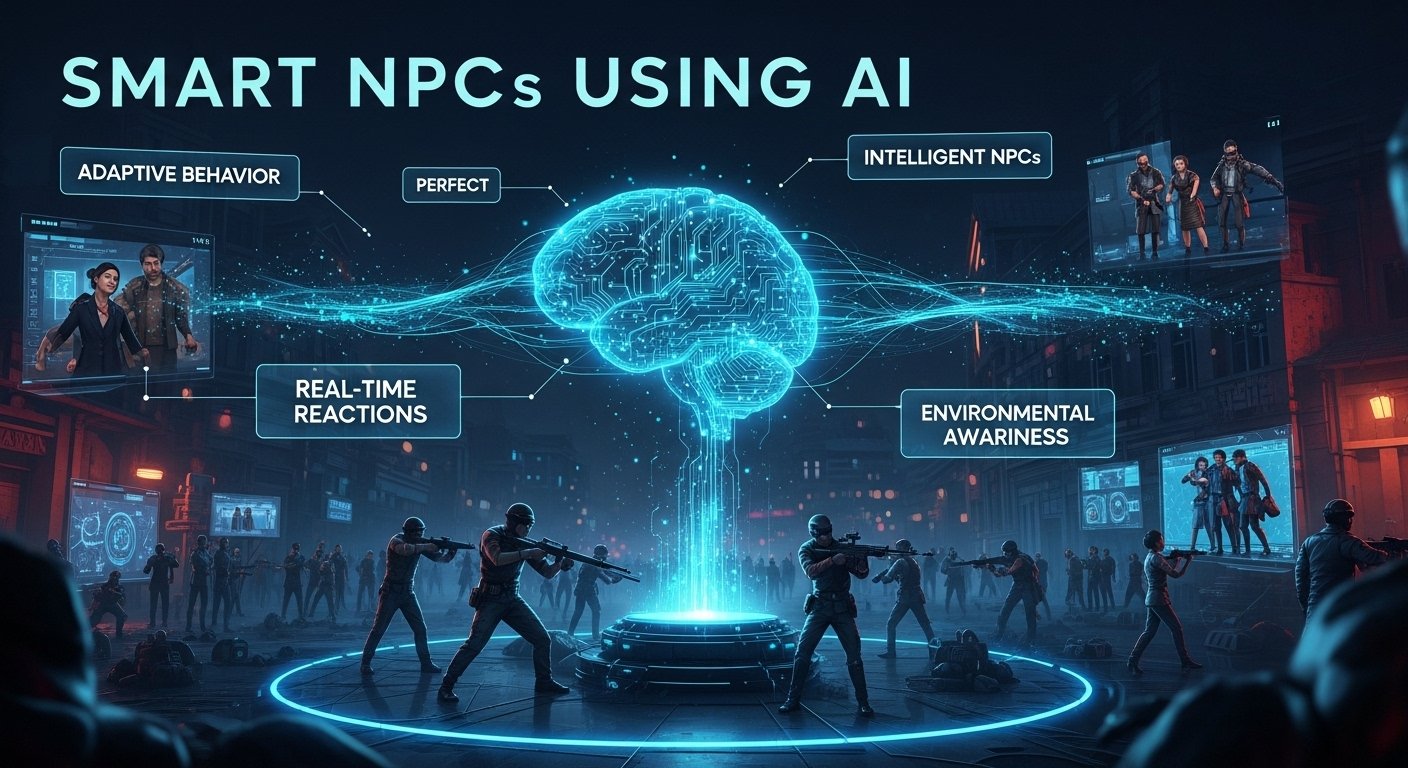
I’ve spent over a decade watching game development evolve, and nothing excites me quite like the current revolution happening with non player characters.The days of NPCs repeating the same three lines while staring blankly into the distance are finally numbered. What we’re witnessing now is a fundamental shift in how virtual characters think, react, and engage with players.
The Problem With Traditional NPCs
Anyone who’s played RPGs knows the frustration. You approach a shopkeeper who greets you with identical enthusiasm whether you’re a legendary hero or a complete stranger. Guards patrol the same routes endlessly. Villagers discuss the same rumors for months of in game time.These scripted behaviors break immersion faster than anything else in gaming.
Traditional NPC design relies heavily on decision trees and finite state machines. Developers write thousands of dialogue lines and pre-program responses to every conceivable player action. It’s exhausting work that still produces characters feeling fundamentally hollow.
I remember interviewing a narrative designer at GDC who admitted they’d written over 40,000 lines of dialogue for a single open-world game. Despite that massive effort, players still found repetitive patterns within hours of gameplay.
How AI Is Changing the Game
Modern artificial intelligence approaches NPC design from an entirely different angle. Rather than scripting every possible interaction, developers now train systems that can generate contextually appropriate responses in real-time.
Several studios have begun implementing large language models that allow NPCs to hold genuine conversations. These characters remember previous interactions, form opinions about player behavior, and respond dynamically to changing circumstances.
Inworld AI and Convai are two companies I’ve watched closely that specialize in creating intelligent NPC systems. Their technology enables characters to maintain consistent personalities while adapting naturally to unexpected player inputs. When a player asks something completely off-script, the NPC doesn’t freeze or repeat a generic line it actually engages.
Real-World Examples Worth Noting
Ubisoft’s NEO NPCs project demonstrated remarkable potential when showcased recently. Characters could be questioned about their backgrounds, motivations, and feelings responding with coherent, personality-driven answers rather than canned responses.
Replica Studios partnered with several indie developers to create NPCs that not only speak dynamically but adjust their emotional delivery based on narrative context. A character delivering bad news sounds genuinely somber. One sharing exciting information expresses authentic enthusiasm.
The modding community has also embraced these technologies enthusiastically. Skyrim and Fallout 4 mods incorporating intelligent NPC systems have accumulated millions of downloads. Players report these modifications fundamentally transform their experience, making aged games feel surprisingly fresh.
The Technology Behind Smart NPCs
Creating believable intelligent characters requires combining multiple technologies. Natural language processing handles understanding player input and generating appropriate responses. Behavior trees still exist but now connect to machine learning systems that select actions based on accumulated experience.
Memory systems allow NPCs to recall past events and maintain continuity. A merchant who witnessed you defend their shop shouldn’t greet you identically to someone they’ve never met. Modern implementations track relationship states, witnessed events, and emotional contexts.
Voice synthesis has improved dramatically, enabling real-time speech generation matching established character voices. This eliminates the jarring disconnect between extensive written dialogue and limited voice acting that plagued earlier attempts at dynamic conversation.
Benefits Beyond Immersion
Smart NPCs offer advantages extending past improved storytelling. Development costs potentially decrease long term since fewer scripted interactions require manual creation. Games can feature larger, more diverse casts without proportional increases in writing workload.
Procedurally generated quests become genuinely interesting when NPCs can explain motivations naturally. Rather than reading boilerplate quest text, players engage in actual conversations about problems and solutions.
Accessibility improves too. Players can ask NPCs for help, clarification, or hints in natural language rather than navigating complex menu systems or consulting external guides.
Challenges and Ethical Considerations
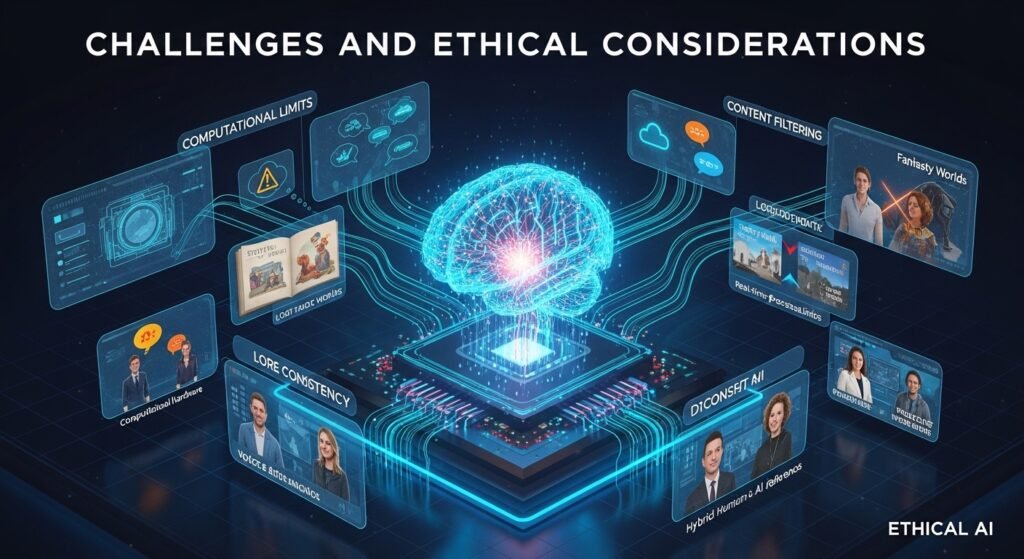
I’d be dishonest if I ignored significant hurdles remaining. Computational requirements for running sophisticated language models strain current hardware. Cloud based solutions introduce latency issues and raise data privacy concerns.
Ensuring NPCs don’t generate inappropriate, offensive, or factually incorrect content requires robust filtering systems. Balancing creative freedom with necessary guardrails remains an ongoing challenge for developers.
There’s also the question of lore consistency. NPCs need sufficient context about game worlds to avoid breaking established narratives. A character casually mentioning real-world events in a fantasy setting destroys immersion instantly.
Voice actors express legitimate concerns about job displacement as synthesis technology improves. The industry must navigate these transitions ethically, potentially finding hybrid approaches that protect creative professionals while embracing technological benefits.
What the Future Holds
Major studios are investing heavily in intelligent NPC research. Microsoft’s acquisition of companies developing conversational AI signals serious long term commitment to this direction.
I expect we’ll see the first AAA release featuring fully intelligent NPCs within the next two years. Indie developers will likely precede them, as smaller projects can iterate faster without massive corporate approval processes.
The ultimate vision many developers share involves NPCs that feel genuinely alive characters players develop actual emotional connections with because every interaction feels unique and meaningful.
Final Thoughts
Smart NPCs represent more than technical achievement. They promise gaming experiences where every player’s story genuinely differs, where virtual worlds feel populated by individuals rather than automatons. We’re witnessing the early stages of a transformation that will fundamentally redefine interactive storytelling.
The technology isn’t perfect yet. But having watched this field evolve, I’m genuinely optimistic about where we’re heading.
FAQs
What are smart NPCs?
Smart NPCs are non-player characters powered by artificial intelligence that can engage in dynamic conversations, remember past interactions, and respond contextually rather than using pre scripted dialogue.
Which games currently use AI-powered NPCs?
Several indie titles and mods feature intelligent NPCs, with major studios like Ubisoft actively developing similar systems for upcoming releases.
Do smart NPCs require internet connection?
Currently, most sophisticated implementations require cloud processing, though local solutions are improving rapidly.
Will AI NPCs replace voice actors?
Hybrid approaches seem likely, with AI handling dynamic responses while professional actors provide core performances.
How do developers prevent inappropriate NPC responses?
Filtering systems, content moderation, and extensive testing help ensure NPCs remain within appropriate boundaries while maintaining conversational flexibility.