
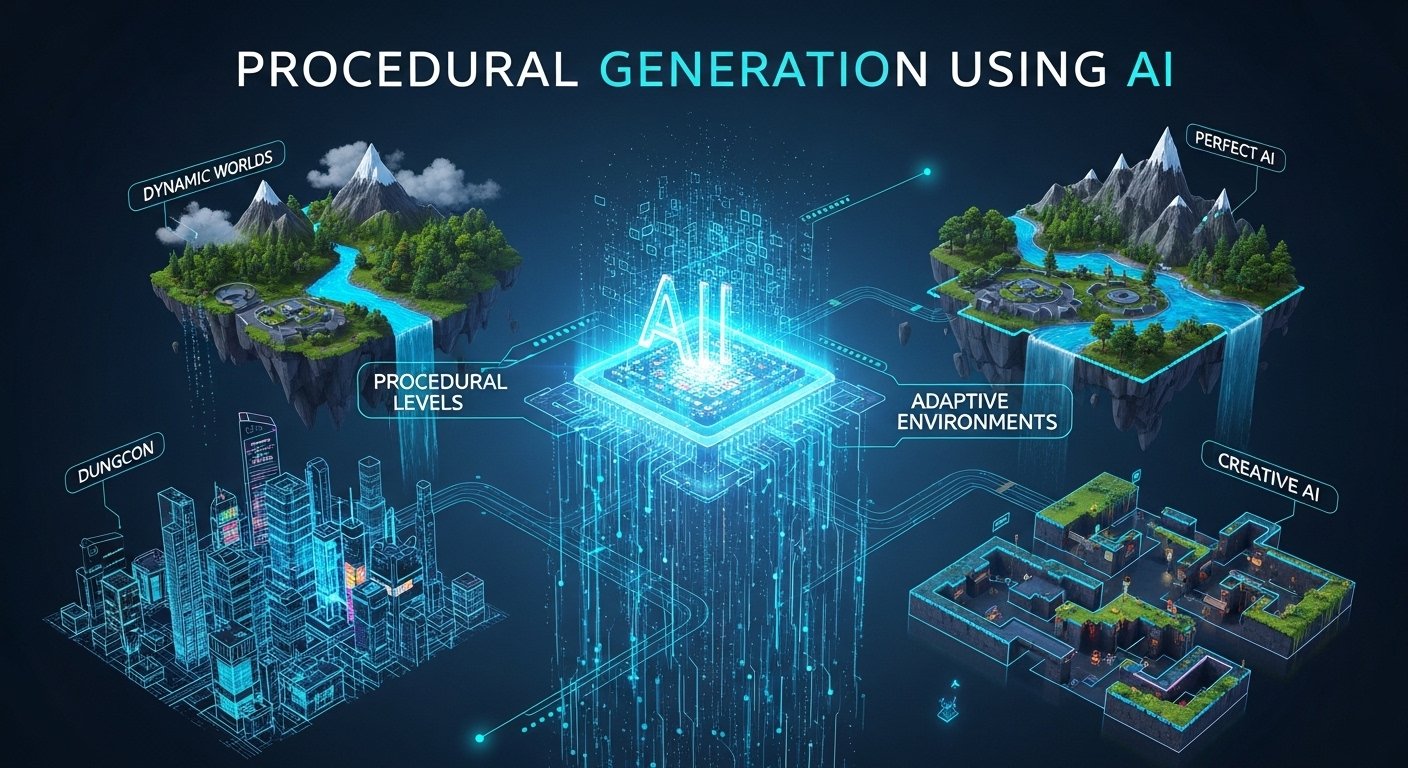
The first time I watched a neural network generate a complete dungeon layout in under three seconds, I realized everything I thought I knew about content creation was about to change. That was four years ago. Today, AI-driven procedural generation isn’t just a fascinating experiment it’s reshaping entire industries.
I’ve spent the better part of a decade working with procedural systems, starting with simple random number generators and gradually moving into machine learning-based approaches. The difference between those early days and now? It’s like comparing a flip phone to a smartphone. Same basic concept, entirely different capabilities.
Understanding the Basics: What Makes AI Procedural Generation Different
Traditional procedural generation relies on algorithms with predefined rules. You tell the system: place a room here, connect it with corridors, add enemies based on difficulty settings. The randomness comes from variables within those constraints. It works, but the results can feel mechanical.
AI-driven procedural generation flips this approach. Instead of following explicit rules, machine learning models learn patterns from existing content and generate new material that feels coherent without being directly copied. The system understands underlying principles rather than just executing instructions.
Think of it like the difference between giving someone a recipe versus teaching them how to cook. With the recipe, they’ll make that exact dish. Teach them cooking principles, and they’ll create dishes you never imagined.
Real-World Applications That Actually Work
Let’s get concrete because theoretical discussions only go so far.
Gaming leads the charge. Titles like Caves of Qud and Dwarf Fortress have pushed procedural storytelling to impressive heights, but newer AI-assisted systems are taking things further. Some developers now use generative adversarial networks to create terrain that mimics natural geological formations. The results look handcrafted because the AI learned from real topographical data.
I consulted on a project last year where the team trained a model on thousands of architectural floor plans. The system could generate building layouts that were structurally sound, aesthetically coherent, and infinitely varied. What would have taken an artist weeks happened in minutes.
Architecture and urban planning are also embracing these tools. Firms use AI procedural systems to generate building designs that optimize for specific parameters natural lighting, traffic flow, material efficiency. It’s not replacing architects; it’s giving them more options to refine.
Music and sound design represent another frontier. Systems trained on specific genres can generate background music that adapts to gameplay or narrative beats. Composers use these as starting points, shaping raw output into finished pieces.
The Technical Side Without the Jargon
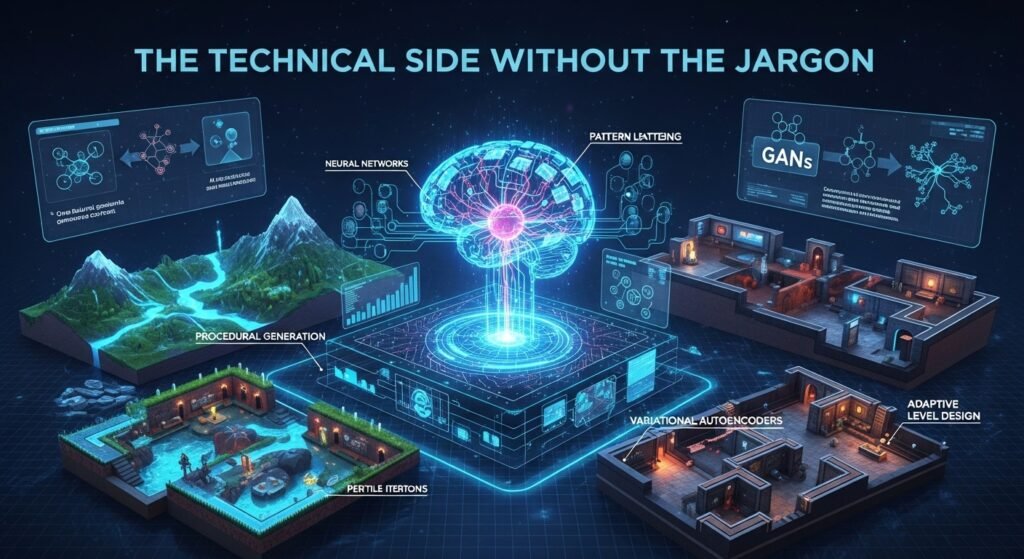
Here’s how this actually works, explained simply.
Most AI procedural generation relies on neural networks trained on large datasets. For terrain generation, you might feed the system satellite imagery and topographical maps. For level design, you’d use existing game levels that players enjoyed.
The network identifies patterns how mountains transition to valleys, how rooms connect logically, how musical phrases resolve. When generating new content, it applies these learned patterns while introducing controlled variation.
Generative adversarial networks (GANs) are particularly popular. Two neural networks compete: one generates content, the other judges whether it looks authentic. Through thousands of iterations, the generator improves until its output becomes indistinguishable from training data.
Variational autoencoders offer another approach, compressing input data into essential features, then reconstructing it with modifications. This allows for more controlled variation while maintaining coherence.
The magic happens when you combine these techniques with traditional procedural methods. AI handles the creative heavy lifting while algorithmic constraints ensure functionality. A generated dungeon looks organic but remains playable because rule-based systems verify connectivity and difficulty curves.
Benefits That Actually Matter
Speed is obvious. What takes humans hours happens in seconds. But the real advantages go deeper.
Infinite variation without infinite resources. Small teams can create games with massive replayability. Indie developers compete with major studios on content volume because their systems never stop producing.
Personalization at scale. AI procedural systems can adapt to individual preferences. A player who struggles with combat might encounter fewer enemies without developers manually creating easier versions of every level.
Creative inspiration. I’ve watched artists and designers use generated content as springboards for ideas they’d never have conceived independently. The AI suggests directions; humans refine and perfect them.
Cost reduction. Creating content remains the biggest expense in game development and digital media production. Automating portions of this process allows budgets to stretch further.
Honest Limitations and Challenges
Anyone selling AI procedural generation as a silver bullet is oversimplifying.
Quality control remains problematic. Generated content occasionally produces nonsensical results terrain that’s impassable, music that’s technically correct but emotionally flat, dialogue that misses cultural context. Human oversight is still essential.
Training data biases carry forward. If your dataset contains certain patterns or perspectives, generated content reflects those limitations. I’ve seen systems trained on Western architecture struggle to produce Asian-inspired designs because the training set wasn’t diverse enough.
Computational costs are significant. Running these models requires substantial processing power. Cloud solutions help, but expenses add up for smaller operations.
There’s also the uncanny valley problem. Sometimes AI generated content feels slightly off without viewers being able to articulate why. That subtle wrongness can undermine otherwise impressive technical achievements.
Ethical Considerations Worth Discussing
When systems learn from existing works, questions about originality and attribution arise. If an AI generates music trained on copyrighted songs, who owns the output? Legal frameworks haven’t caught up with technological capabilities.
Job displacement concerns are valid but often overstated. In my experience, these tools change job descriptions more than they eliminate positions. Artists become curators and refiners rather than pure creators. That transition isn’t always comfortable, but it’s different from obsolescence.
Environmental impact deserves mention too. Training large models consumes considerable energy. Responsible development includes considering these costs.
Looking Ahead
The trajectory points toward increasingly sophisticated systems that require less human intervention while producing more coherent results. Real-time generation where content creates itself as you experience it is becoming feasible for more applications.
But the most exciting developments might be in collaboration rather than automation. Systems that understand creative intent and suggest possibilities rather than replacing human decision making entirely.
That’s the future I’m betting on: AI as an incredibly capable creative partner, not a replacement.
Frequently Asked Questions
What is AI procedural generation?
It’s using machine learning to create content levels, textures, music, architecture by learning patterns from existing examples rather than following explicit programmed rules.
How does it differ from traditional procedural generation?
Traditional methods use fixed algorithms with randomization. AI-driven approaches learn implicit patterns and generate content that feels more organic and varied.
Which industries use this technology most?
Gaming leads adoption, followed by architecture, music production, film visual effects, and urban planning.
Can small teams use AI procedural generation?
Yes. Many accessible tools and frameworks now exist, though sophisticated implementations still require technical expertise.
Does AI procedural generation replace human creators?
Not entirely. Human oversight remains essential for quality control, creative direction, and handling edge cases that automated systems miss.
What are the biggest current limitations?
Quality inconsistency, training data requirements, computational costs, and occasional uncanny valley effects in generated content.