
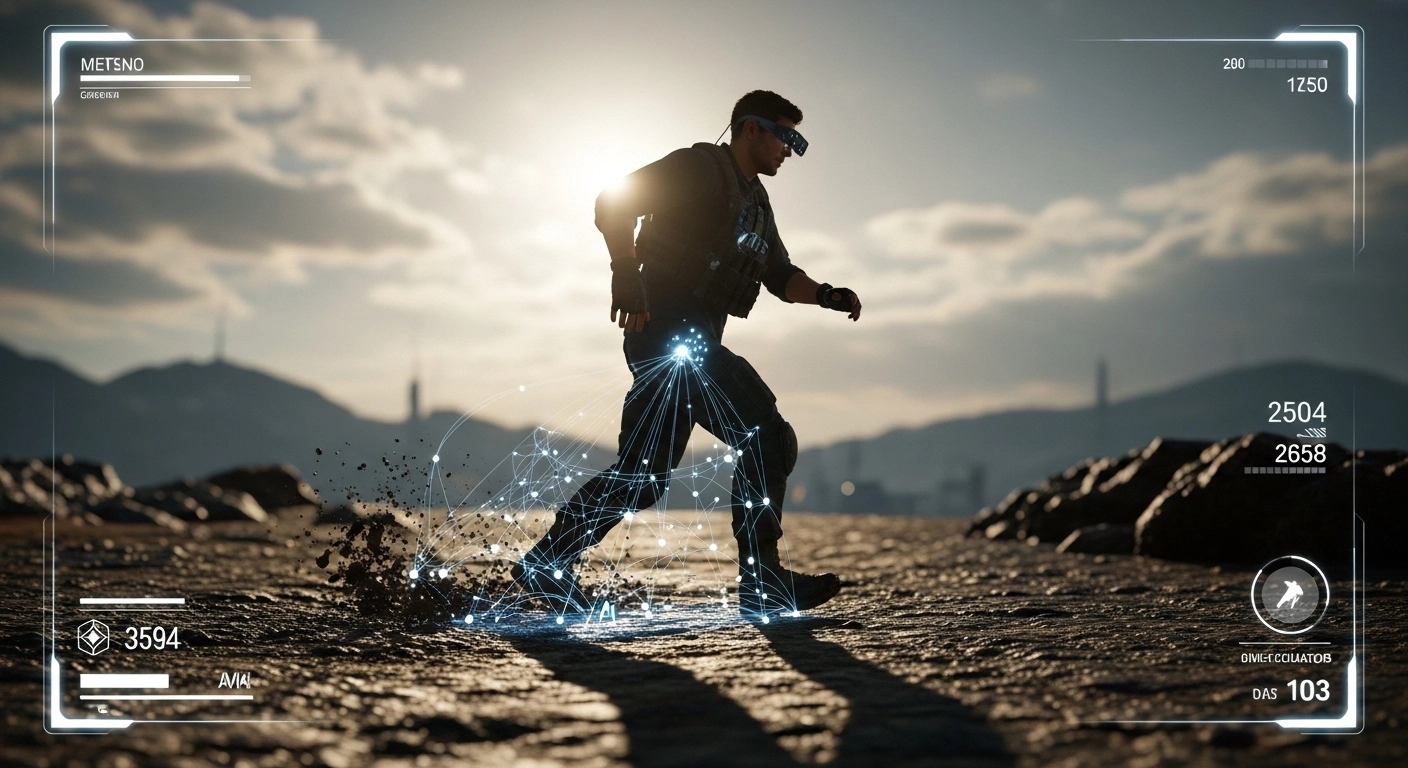
There’s a subtle test I do whenever playing a new game. I find a slope, some stairs, maybe an oddly shaped rock, and I just watch. Does the character’s feet plant naturally? Do they adjust their weight realistically? Or do they clip through geometry like ghosts wearing human costumes?
These details might seem trivial. They’re absolutely not. AI driven character movement has become one of the most transformative technologies in modern game development, yet it operates almost entirely beneath conscious awareness. When it works, players feel immersed without understanding why. When it fails, something feels off even if they can’t articulate what.
Beyond Canned Animations
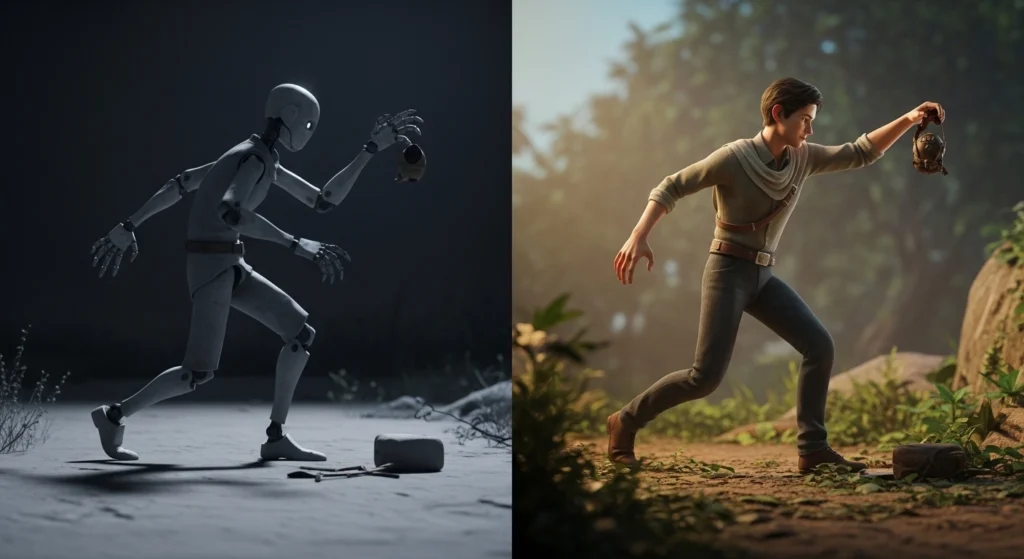
For decades, game characters moved through predetermined animation clips. Walk cycles, run cycles, jump arcs all meticulously crafted by animators and triggered by player input. These systems worked reasonably well but suffered from obvious limitations.
Characters floated over terrain irregularities. Feet would slide during directional changes. Interactions with environments looked disconnected, as if characters existed in a separate reality from the world around them.
AI driven movement changes this fundamentally. Instead of playing back recorded animations regardless of context, intelligent systems analyze environmental conditions and generate or modify movements in real time. The character becomes genuinely responsive to their surroundings rather than performing choreographed routines.
How Intelligent Movement Systems Work
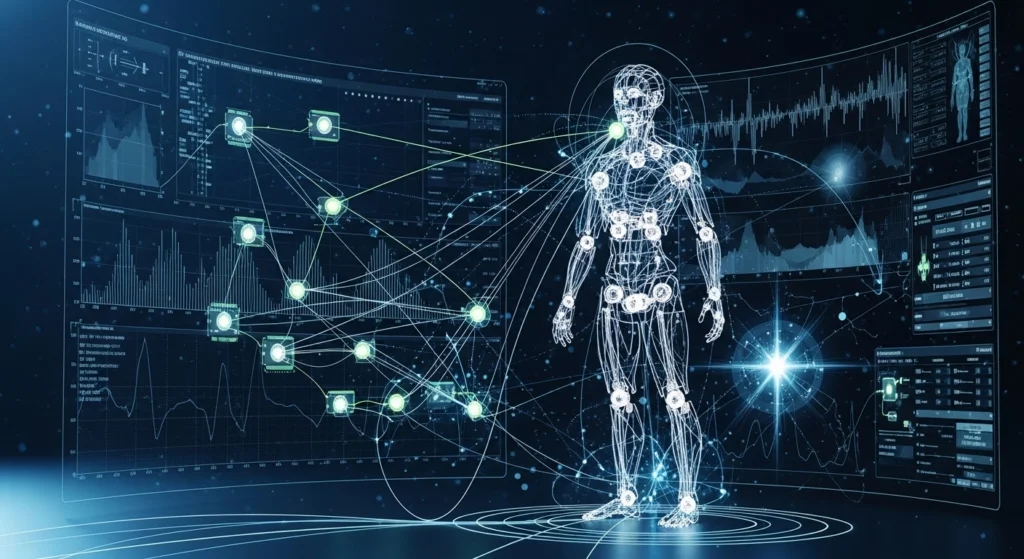
The technical foundation involves several interconnected components working simultaneously. Understanding each helps appreciate why modern character movement feels so different from older games.
Inverse Kinematics forms the mathematical backbone. IK systems calculate how limbs should position themselves to reach target points. When a character steps onto uneven ground, IK adjusts leg positions so feet actually contact surfaces rather than hovering or penetrating geometry. This sounds simple but requires sophisticated real time computation.
Procedural Animation generates movement mathematically rather than relying entirely on captured or keyframed data. Walking doesn’t require a walk animation file the system synthesizes appropriate leg movements based on speed, direction, and terrain. Procedural systems can produce infinite variations that pre made animations couldn’t possibly cover.
Physics Integration adds another layer of believability. Characters respond to forces, momentum, and environmental interactions. Colliding with obstacles produces realistic stumbles. Jumping accounts for actual velocity and mass. The body obeys physical laws rather than animation scripts.
Machine Learning represents the newest frontier. Neural networks trained on vast movement datasets can predict and generate contextually appropriate motions. These systems learn patterns from real human movement, then apply that knowledge to novel situations the training data never explicitly covered.
Real World Implementation
Rockstar Games pushed AI driven movement significantly with Red Dead Redemption 2. Arthur Morgan doesn’t just play walking animations he reacts to surfaces, adjusts his balance on hillsides, and catches himself when stumbling. The integration of physics and procedural systems creates emergent behaviors that surprise even the developers.
I’ve watched players instinctively duck when Arthur struggles through dense brush, physically responding to character movement that feels genuinely laborious. That’s the power of believable motion.
Naughty Dog’s approach in The Last of Us Part II combined motion matching with extensive IK systems. Characters reach toward walls for stability, plant hands appropriately when climbing, and adjust posture based on threat proximity. These behaviors emerge from intelligent systems rather than manually authored animations.
Ubisoft’s recent Assassin’s Creed entries demonstrate parkour-focused AI movement. Characters evaluate climbable surfaces, plan traversal routes, and execute contextual movements that adapt to architectural variations. The free-running feels intuitive because underlying systems handle countless micro-decisions automatically.
The Player Experience Impact
When character movement feels right, players develop deeper connections with their avatars. There’s psychological research supporting this embodiment in virtual environments increases when movement appears natural and responsive.
Combat benefits tremendously from intelligent movement systems. Fighting games and action titles need attacks to feel impactful while maintaining visual believability. AI driven systems help characters recover from hits realistically, shift weight during strikes appropriately, and maintain balance during complex maneuvers.
Exploration becomes more engaging too. Navigating environments transforms from mechanical A-to-B traversal into something that feels genuinely physical. Players develop intuitive understanding of what their character can handle because movement respects environmental logic.
Development Challenges
Implementing AI driven movement isn’t straightforward. Processing requirements remain substantial calculating physics, running IK solvers, and evaluating movement options demands significant computational resources alongside everything else games need to handle.
Artistic control presents ongoing tension. Traditional animation allows precise creative direction over every movement. AI systems introduce variability that can conflict with specific artistic intentions. Finding balance between procedural flexibility and authored feel requires careful tuning.
Edge cases create headaches. AI movement systems handle common situations well but sometimes produce bizarre results in unexpected circumstances. A character might contort strangely when geometry doesn’t match assumptions, or physics interactions might cascade into amusing failures. Quality assurance for these systems requires extensive testing across countless scenarios.
Where This Technology Heads Next
The trajectory points toward increasingly sophisticated integration. Future systems will likely blend learned movement models with physics simulation more seamlessly, producing characters that move with unprecedented naturalism while remaining computationally efficient.
Facial movement and body language coordination represents expanding territory. Current systems often handle locomotion separately from emotional expression. Unified approaches could create characters whose entire physical presentation responds cohesively to context.
Cross platform accessibility matters too. As middleware solutions mature, AI driven movement will become available to smaller developers without massive technical teams. Democratization of these tools could raise baseline quality across the entire industry.
The Invisible Art
Perhaps what strikes me most about AI driven character movement is how success means disappearing entirely. Players shouldn’t notice the technology they should simply feel present in game worlds through characters that move believably.
That invisibility represents the ultimate achievement. Countless hours of engineering and research condensing into moments where players never think about animation at all. They just play, immersed in worlds where characters feel genuinely alive.
The technology continues advancing rapidly. What seemed remarkable five years ago now appears as baseline expectation. Where this evolution leads remains genuinely exciting and I suspect we’ve only glimpsed what intelligent movement systems will eventually achieve.
Frequently Asked Questions
What is AI driven character movement?
AI driven character movement uses intelligent systems to generate or modify animations in real time based on environmental context, physics, and player input rather than relying solely on pre made animation clips.
How does it differ from traditional animation?
Traditional animation plays predetermined clips regardless of context. AI driven systems adapt movements dynamically to terrain, obstacles, forces, and situational factors.
Which games showcase AI driven movement well?
Notable examples include Red Dead Redemption 2, The Last of Us Part II, Horizon Forbidden West, and recent Assassin’s Creed titles.
Does AI movement replace animators?
No. Animators remain essential for artistic direction, personality, and crafting foundational movement data that AI systems enhance and adapt.
Why do some games still have stiff character movement?
AI driven systems require significant development resources and processing power. Budget constraints, platform limitations, or design priorities may lead studios toward simpler approaches.
What technologies enable AI driven movement?
Key technologies include inverse kinematics, procedural animation, physics simulation, motion matching, and machine learning-based motion synthesis.