
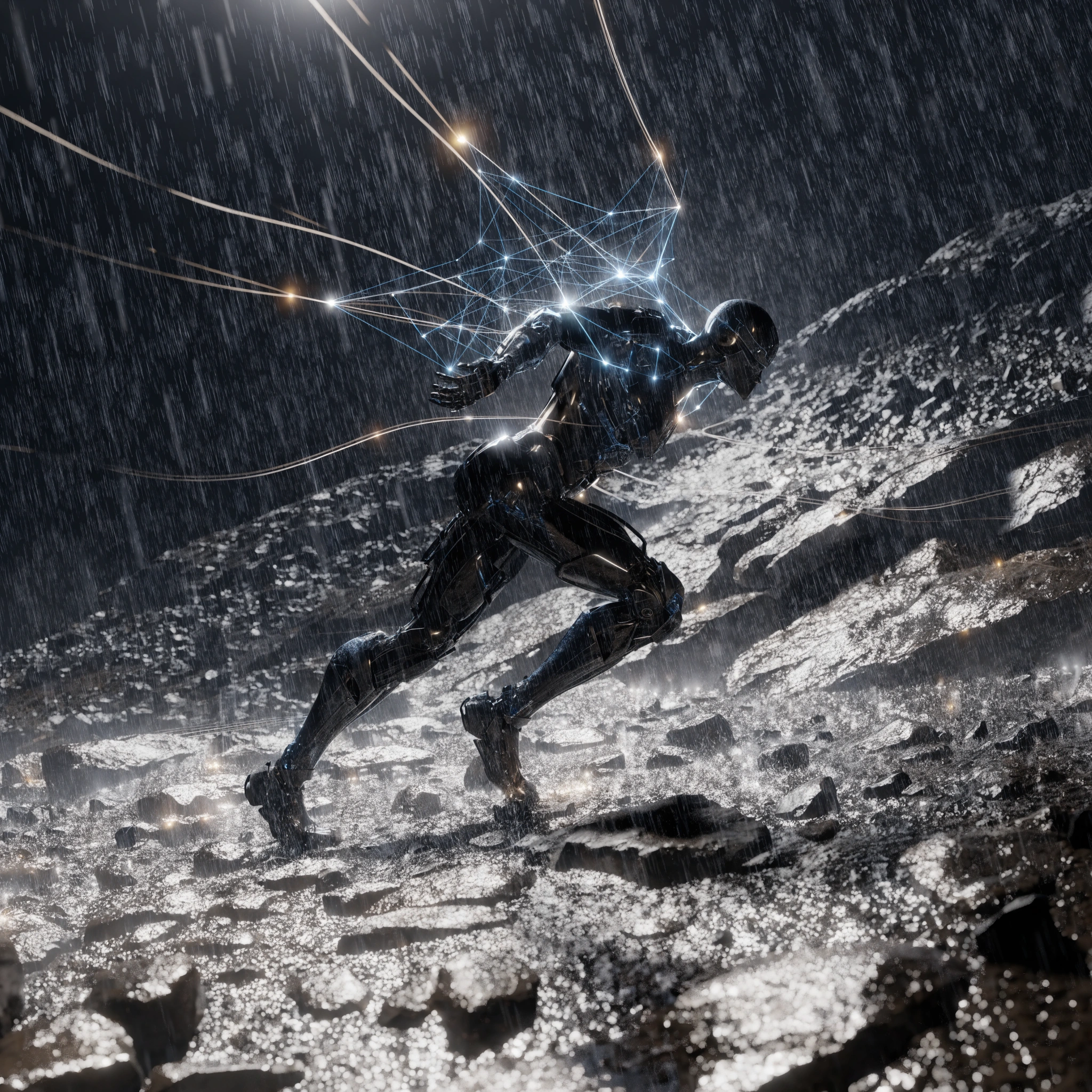
I still remember the first time I watched a character in a video game stumble realistically over uneven terrain without any hand keyed animation. It was one of those moments that makes you stop and think about how far we’ve come. That seamless interaction between a digital character and its environment? That’s procedural animation at work, and lately, artificial intelligence has been pushing it into territory that would’ve seemed like science fiction just a few years ago.
What Procedural Animation Actually Means
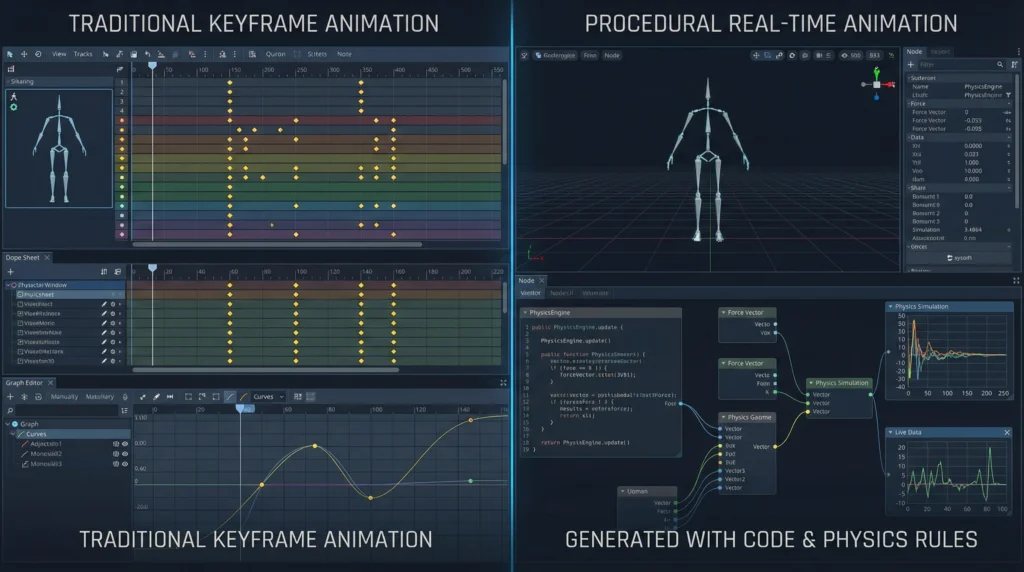
Before we dive into the AI side of things, let’s get clear on what procedural animation is. Unlike traditional animation where artists painstakingly create every frame of movement, procedural animation uses algorithms and rules to generate motion on the fly. Think of it like the difference between painting every blade of grass individually versus creating a system that grows grass wherever it’s needed.
I’ve worked on projects where animators spent weeks perfecting a walk cycle, only to have it look stiff when the character walked uphill. Procedural systems solve this by calculating how a character should move based on physics, terrain, and other environmental factors. The animation adapts in real time rather than playing back a pre-recorded sequence.
Where AI Enters the Picture
Here’s where things get genuinely interesting. Traditional procedural animation relied on rules programmed by developers if the character encounters a slope, adjust the leg angle by X degrees, shift the center of mass by Y amount, and so on. It worked, but it was rigid and time consuming to set up.
AI, particularly machine learning techniques, changes the game entirely. Instead of manually programming every rule, you can train neural networks on massive datasets of real motion. The system learns patterns how humans actually shift their weight when turning, how fabric drapes and flows with movement, how a tired character might favor one leg.
A company I consulted with last year was developing a sports game. They captured hundreds of hours of real athletes performing moves. Using machine learning models, they created a system that could generate new, believable athletic movements that were never in the original dataset. The AI learned the underlying principles of how bodies move under physical stress and could extrapolate naturally.
The Technical Reality (Without Getting Lost in the Weeds)
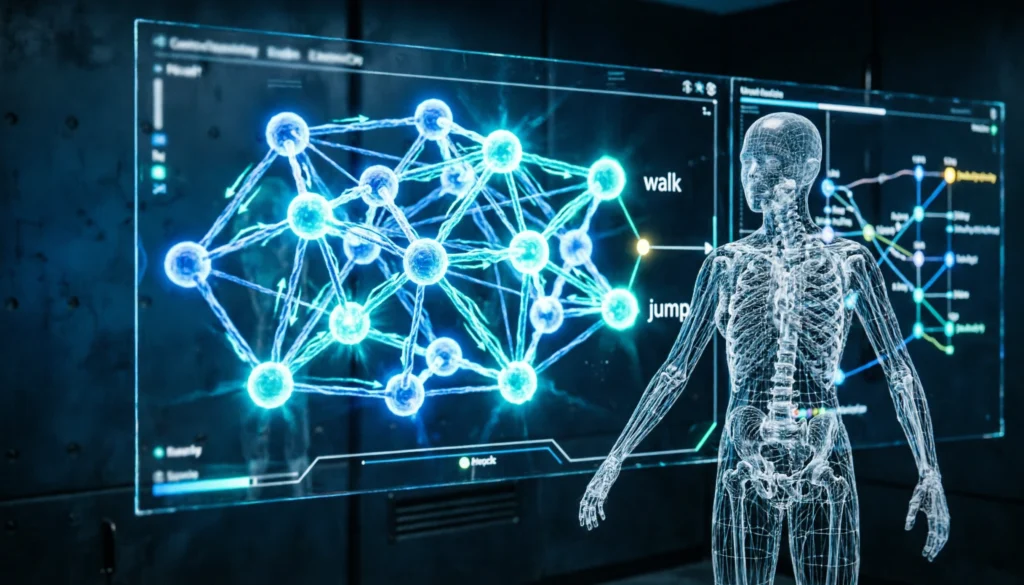
Most AI driven procedural animation systems today use something called motion synthesis networks. These neural networks take high level inputs like “walk to this point” or “pick up this object” and output the detailed joint rotations and movements needed to accomplish the task.
What makes this powerful is context awareness. The AI doesn’t just play back canned animations; it considers the character’s current pose, the environment, objects in the scene, and even emotional state (in more advanced implementations). I’ve seen systems that smoothly transition a character from a dead sprint into a sharp turn while avoiding obstacles, all without a single hand-animated frame specifically designed for that exact scenario.
One technique gaining traction is called motion matching with neural networks. The system maintains a database of motion clips but uses AI to find the best transitions and blends between them. It’s like having an incredibly smart assistant who knows exactly which animation snippet to pull and how to seamlessly stitch it together.
Real-World Applications That Actually Matter
Gaming is the obvious application, and it’s transforming how open-world games feel. When every character can realistically interact with their environment climbing varied terrain, reacting to weather, adjusting their gait based on injury the immersion deepens considerably.
But I’ve also seen this technology make waves in film and television. Virtual production is increasingly common, and AI driven procedural animation lets background characters behave naturally without requiring animators to choreograph every extra’s movements. On a recent production (under NDA, so I can’t name it), crowd scenes that would’ve taken weeks were generated procedurally in days, with AI ensuring each character moved distinctively.
The medical field has started adopting this too. Surgical simulations and physical therapy applications use AI powered procedural animation to create realistic human movement models. These systems help train surgeons on how tissue behaves or assist physical therapists in demonstrating proper movement mechanics to patients.
The Challenges Nobody Talks About Enough
Let’s be honest this technology isn’t perfect, and there are legitimate concerns. Training data bias is a real issue. If your neural network learns from motion capture data primarily from young, athletic performers, it might struggle to generate realistic elderly movement or movements from people with different body types or disabilities.
I’ve also encountered the “uncanny valley” problem more than once. Sometimes AI-generated motion is almost perfect but has subtle wrongness that’s more unsettling than obviously artificial animation. There’s an art to knowing when to let the AI do its thing and when human animators need to step in.
Computational cost is another practical limitation. Running complex neural networks in real-time requires serious hardware. Not every application can afford that overhead, especially on mobile platforms or lower end gaming systems.
Looking Ahead (Cautiously Optimistic)
The trajectory seems clear: AI will become increasingly integrated into procedural animation pipelines, but it won’t replace human creativity. What I see happening is a partnership where AI handles the tedious, repetitive aspects basic locomotion, physical reactions, secondary motion while human animators focus on emotional nuance, storytelling moments, and creative direction.
We’re also likely to see democratization. Tools that once required specialized programming knowledge are becoming more accessible. Indie game developers and small studios can leverage AI powered procedural animation systems that would’ve been out of reach just a few years ago.
Ethical considerations around deepfakes and digital likeness rights will become more prominent. If AI can generate realistic human motion convincingly, the boundaries of consent and digital rights will need clearer definition. This isn’t hypothetical it’s already being debated in industry circles.
The Bottom Line
Procedural animation powered by AI represents a fundamental shift in how we create digital motion. It’s not just an incremental improvement; it’s a different paradigm. The technology enables more responsive, realistic, and varied animation at scales previously impossible.
But like any tool, its value depends on how we use it. The most successful implementations I’ve witnessed combine AI capabilities with human expertise and artistic vision. The algorithm provides the foundation, but human judgment determines whether the result serves the creative goal.
For anyone working in animation, game development, or related fields, understanding at least the basics of AI driven procedural animation isn’t optional anymore it’s becoming fundamental. The learning curve exists, certainly, but the creative possibilities make it worthwhile.
FAQs
What’s the difference between procedural animation and traditional animation?
Traditional animation uses pre created frames or keyframes that play back identically each time. Procedural animation generates movement algorithmically based on rules and conditions, creating unique motion each time it runs.
Do you need coding skills to use AI procedural animation tools?
It depends on the tool. Some modern platforms offer user friendly interfaces requiring minimal coding, while more advanced implementations still require programming knowledge and understanding of machine learning concepts.
Can AI procedural animation completely replace human animators?
No. While AI handles certain tasks efficiently, human animators provide creative direction, emotional depth, and artistic choices that algorithms can’t replicate. The best results come from combining both.
What hardware is needed to run AI-powered procedural animation?
Requirements vary widely depending on complexity. Simple implementations can run on modest systems, but real time neural network inference for complex characters typically requires dedicated GPUs with substantial processing power.
Is AI procedural animation only for big studios?
Not anymore. While cutting edge research happens at large companies, increasingly accessible tools and cloud-based services are making this technology available to smaller studios and independent creators.