
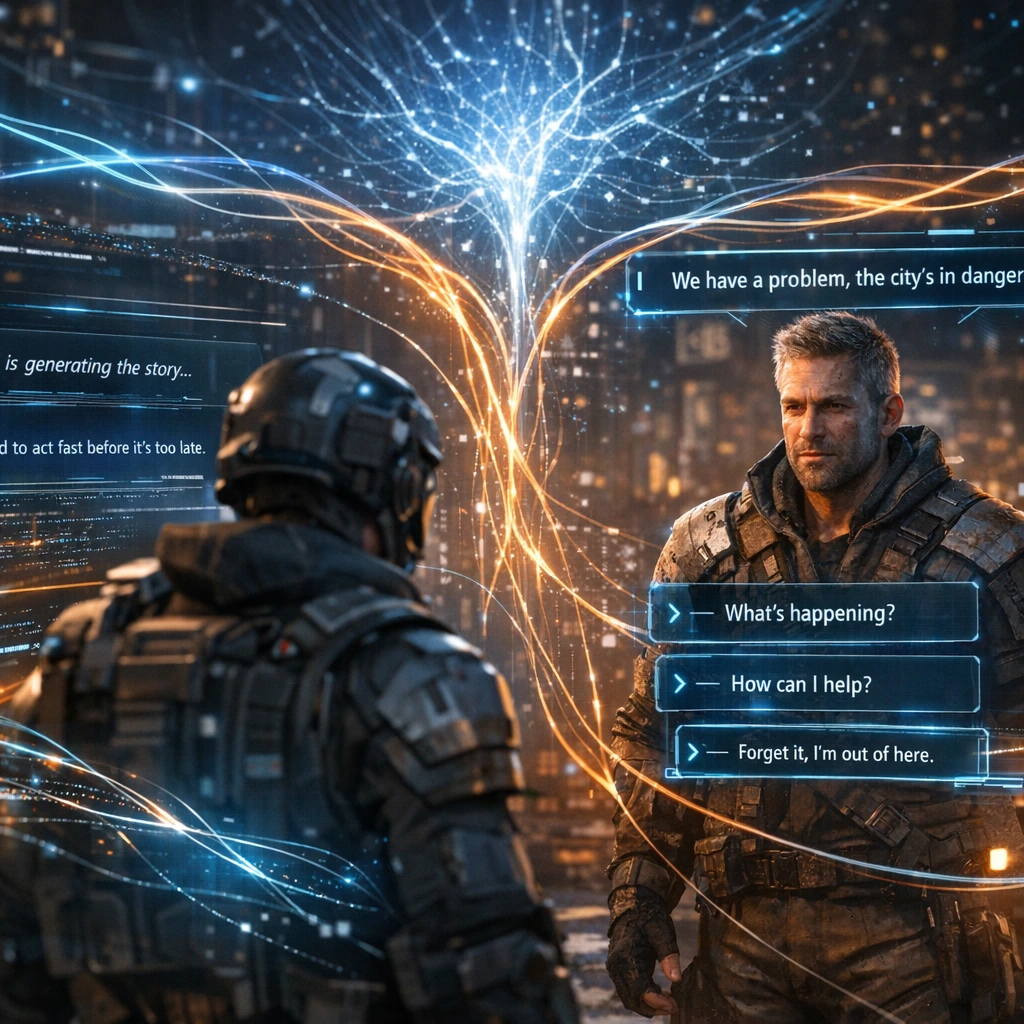
Something strange happened during a playthrough last year that I still think about. I was testing an indie RPG with dynamic dialogue systems, and my character made a throwaway comment about being afraid of storms early in the game. Hours later, during a pivotal scene, an NPC referenced that fear in a way that felt genuinely empathetic. Nobody wrote that specific exchange. The system connected dots I’d forgotten about.
That moment crystallized why I’ve become obsessed with AI powered storytelling in games. After years of playing titles with branching narratives that ultimately funnel into identical endings, the possibility of genuinely responsive stories feels like we’re finally delivering on promises the industry made decades ago.
The Difference Between Choice and Response
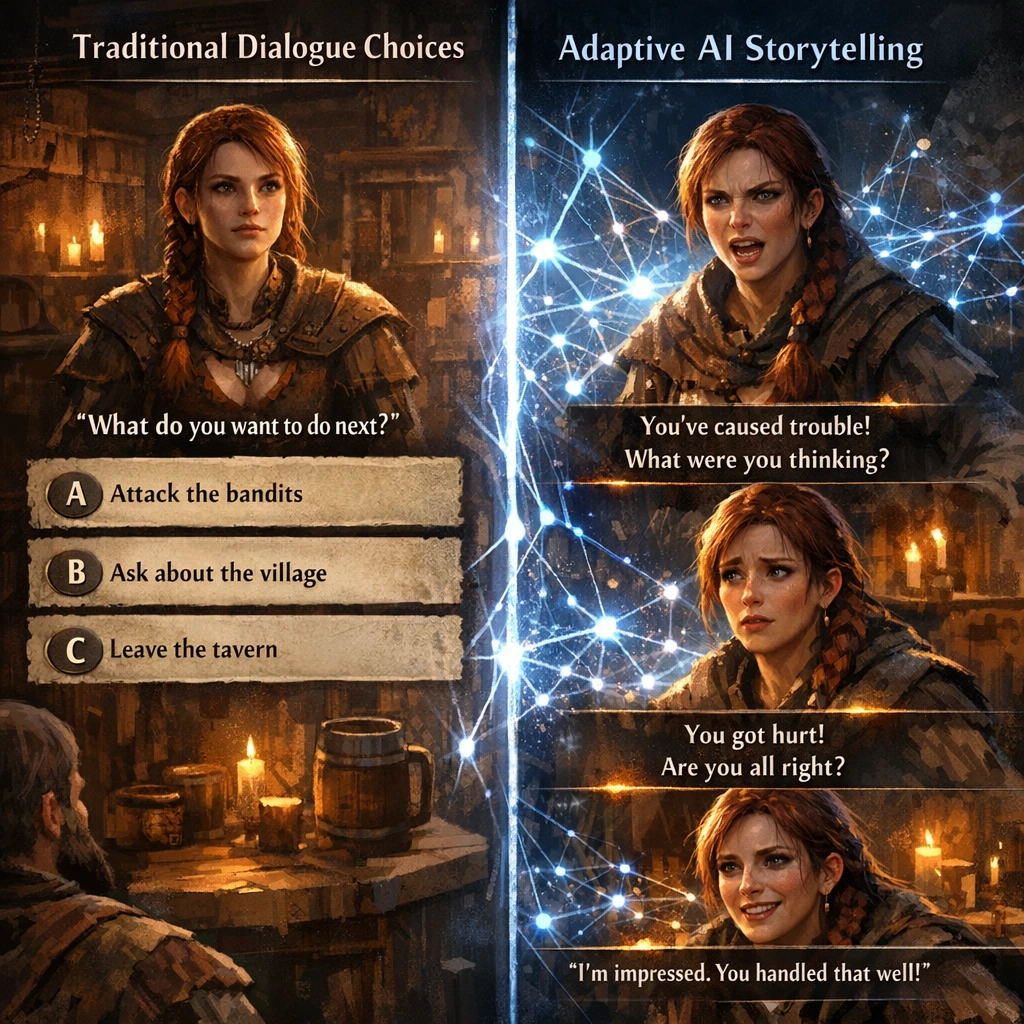
Traditional narrative games offer choice. You pick dialogue option A, B, or C. Maybe your decision affects which cutscene plays later. Perhaps a character lives or dies based on your selection. These systems create meaningful experiences The Witcher 3 and Mass Effect proved that definitively.
But there’s always a ceiling. Writers can only script so many outcomes. Eventually, players recognize patterns. They realize the illusion of consequence has limits. You’re not really shaping the story; you’re selecting from pre-written alternatives.
AI powered storytelling approaches this differently. Instead of choosing between existing options, players influence narratives that generate responses to their specific actions. The story doesn’t branch it flows, adapting continuously to player behavior, choices, and even playstyle.
I spoke with a narrative designer working on an upcoming title who described it as “the difference between a choose your own adventure book and an actual conversation.” In conversations, people respond to what you actually said, not what you might have said. That responsiveness is what these systems attempt to capture.
Where We’re Seeing This Work
Several games have implemented early versions of this technology with varying success. Spirit AI’s Character Engine powers NPCs in multiple titles, allowing characters to respond contextually rather than through scripted trees. The results aren’t perfect, but they demonstrate proof of concept.
Façade, though released back in 2005, remains a fascinating early example. That experimental game featured characters who responded to typed input in real-time, creating genuinely unpredictable dramatic scenarios. The technology was primitive by current standards, but the design philosophy anticipated where we’re heading.
More recently, games like AI Dungeon pushed boundaries by generating entire narrative scenarios on the fly. The experience can feel inconsistent sometimes brilliant, sometimes nonsensical but it revealed player appetite for truly responsive storytelling.
What excites me most are hybrid implementations. Disco Elysium isn’t technically AI powered, but its systemic approach to dialogue where skills argue with each other and personality traits influence available options points toward design philosophies that sophisticated systems could expand dramatically.
The Writer’s Evolving Role

Here’s a concern I hear constantly: does this technology eliminate the need for writers? Having interviewed multiple narrative designers working with these systems, I can say definitively no. If anything, their roles become more complex.
Traditional game writing involves crafting specific scenes, dialogue lines, and story beats. AI powered storytelling requires something different building frameworks, establishing character personalities, defining emotional boundaries, and creating systems that generate appropriate content within those constraints.
One writer compared it to the difference between sculpting a statue and teaching someone else to sculpt. You’re not writing the story anymore; you’re defining what the story could become across infinite permutations. That demands deeper understanding of character psychology, narrative structure, and emotional resonance.
The best implementations I’ve experienced feel authored even when they’re generated. That’s not accidental. Skilled writers established parameters that ensure quality regardless of specific output.
Player Impact and Emotional Investment
Does responsive storytelling actually create better experiences? Based on my extensive playtesting, the answer depends on execution.
When it works, the emotional investment intensifies dramatically. Knowing that characters respond to your unique actions rather than following predetermined scripts creates genuine attachment. Consequences feel real because they stem from your behavior, not your selection from a menu.
I remember a session where my consistently aggressive dialogue choices led an NPC to become increasingly distant over several hours. When that character refused to help during a critical moment, it stung. I’d earned that rejection through accumulated hostility, not a single wrong choice. The causality felt natural rather than mechanical.
When it fails, the experience feels worse than traditional scripted narratives. Inconsistent responses, characters forgetting established facts, or tonally inappropriate dialogue breaks immersion more severely than limited but polished branching paths. Players tolerate fewer options if those options feel crafted. They struggle with infinite options that feel hollow.
Challenges Nobody’s Fully Solved
Consistency remains the biggest technical hurdle. Maintaining character voice across generated content requires enormous sophistication. A gruff warrior shouldn’t suddenly speak poetically unless that shift serves the story. Ensuring generated content respects established personality proves challenging at scale.
Quality control creates logistical nightmares. You can’t playtest infinite outcomes. Developers must trust their systems while acknowledging that players will encounter edge cases producing unintended results. Some studios implement filtering and boundaries, but comprehensive quality assurance remains impossible for truly dynamic content.
Narrative structure presents philosophical questions. Traditional stories follow arcs—rising action, climax, resolution. Generated narratives risk becoming formless, satisfying moment-to-moment without building toward meaningful conclusions. Balancing responsiveness with structural integrity requires careful design that few studios have mastered.
Ethical Dimensions Worth Considering
Responsive narratives that adapt to player behavior raise interesting ethical questions. If a system observes player aggression and escalates dark content accordingly, where does entertainment end and something potentially harmful begin?
The intimacy these systems can create also deserves consideration. Characters that remember personal details and respond empathetically build genuine emotional connections. That’s powerful for storytelling but requires thoughtful handling, particularly regarding player data and psychological impact.
Developers I’ve spoken with take these concerns seriously. Most advocate for transparency about system capabilities and player control over adaptation intensity. The industry still lacks established standards, but conversations are happening.
What Comes Next
Within the next few years, I expect AI powered storytelling to become standard in narrative-focused games rather than experimental novelty. The technology is maturing rapidly. Studios are learning what works through iteration. Player expectations are shifting accordingly.
The games that will define this era won’t simply implement responsive systems they’ll understand why responsiveness matters narratively and design experiences that leverage these capabilities meaningfully. Technology enables; design delivers.
Frequently Asked Questions
Will AI storytelling replace human writers?
No. Writers transition toward designing systems, establishing characters, and defining narrative frameworks rather than scripting specific scenes.
Which current games best demonstrate this technology?
AI Dungeon, games using Spirit AI’s Character Engine, and various experimental indie titles showcase current capabilities with varying quality.
Does responsive storytelling work for all game genres?
It suits narrative-focused experiences best. Action games or competitive titles benefit less from sophisticated dialogue systems.
Can players break these systems intentionally?
Yes. Edge cases and unusual inputs can produce inconsistent results. Robust implementation minimizes but can’t eliminate these issues entirely.
How do developers maintain story quality with generated content?
Through carefully designed constraints, personality parameters, and systemic boundaries that ensure generated content meets quality standards.
When will mainstream games adopt this technology broadly?
Expect significant adoption within three to five years as technology matures and development costs decrease.