

I’ve been covering gaming technology for longer than I’d like to admit, and I’ve learned to approach “next generation” claims with healthy skepticism. Every console cycle brings promises of revolutionary leaps that often amount to prettier graphics and faster loading times. But what’s happening with next generation AI games feels genuinely different. The fundamentals of how games function are shifting beneath our feet.
Last fall, I attended a private showcase where developers demonstrated prototypes that wouldn’t have been possible five years ago. Characters that understood context. Worlds that evolved based on collective player behavior. Systems that learned individual playstyles and adapted accordingly. These weren’t tech demos or conceptual presentations they were playable builds from studios preparing actual releases.
Defining What “Next Generation” Actually Means
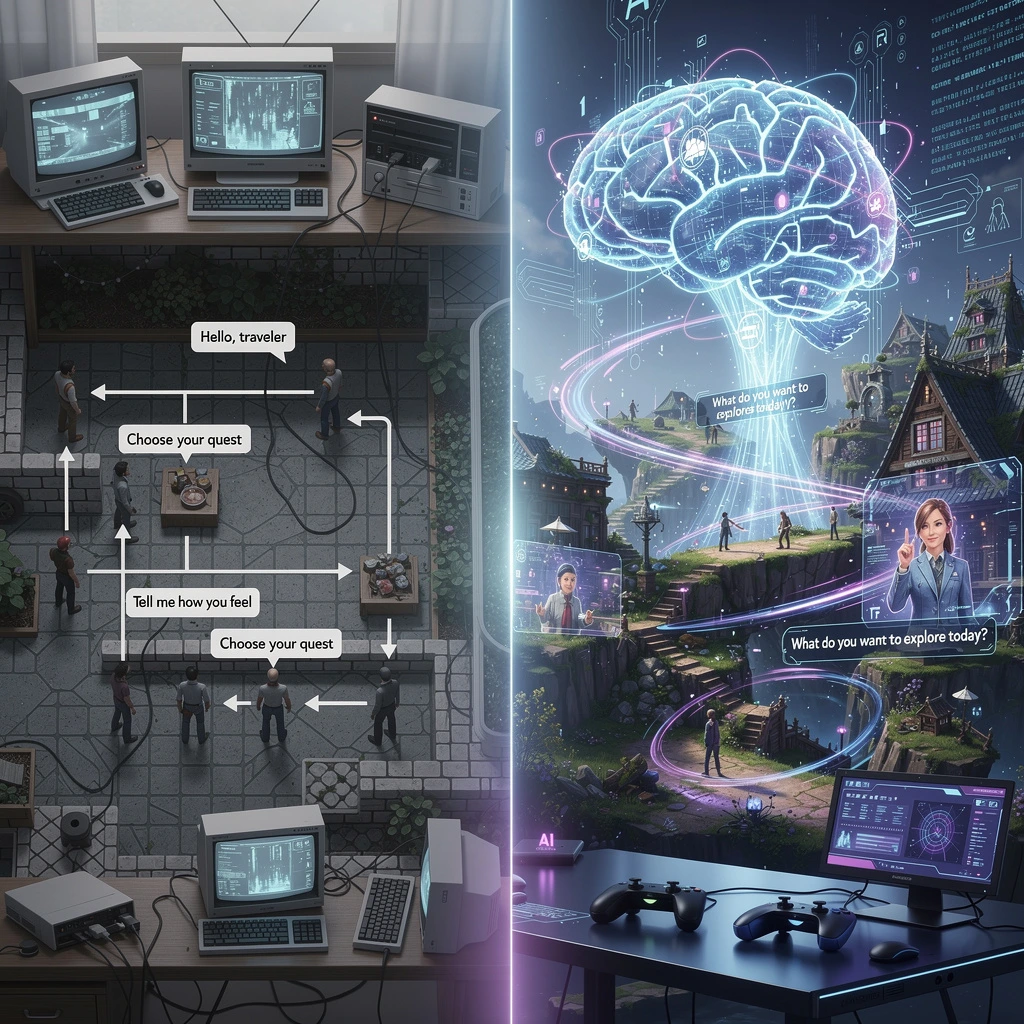
Let’s get specific because the term gets thrown around carelessly. Next generation AI games aren’t simply titles with smarter enemies or better pathfinding. Those improvements happen incrementally every year. What we’re discussing represents fundamental changes to game architecture.
Traditional games operate on predetermined rules. Enemies follow behavior trees. Dialogue branches into scripted options. Level design remains static after release. Players explore systems that designers explicitly created.
Next generation approaches introduce genuine learning and adaptation. Non-player characters develop relationships with players based on accumulated interactions. Game worlds generate content that maintains design coherence while offering infinite variety. Difficulty adjusts not just to skill level but to individual player psychology and preferences.
The distinction matters because it affects every aspect of the player experience. You’re not navigating content designers anticipated you’re participating in systems that respond to your unique presence.
Where Development Stands Right Now
Several studios have publicly committed resources toward these technologies. Ubisoft’s research division has published papers on autonomous NPC behavior. Electronic Arts invested heavily in adaptive systems through their SEED initiative. Smaller studios like Latitude explored emergent narrative through experimental projects.
Sony’s PlayStation division filed patents suggesting future titles will feature characters that learn from global player data and adapt behaviors accordingly. Microsoft’s acquisition of various studios positions them to integrate advanced systems across first-party titles.
But promises and patents don’t equal shipped products. Based on conversations with developers actually building these systems, realistic timelines suggest gradual implementation over the next three to five years. We’ll see features appear incrementally rather than arriving fully formed in single revolutionary releases.
The first wave will likely involve enhanced NPC intelligence and adaptive difficulty. Later implementations will tackle dynamic storytelling and persistent world evolution. Full realization games that genuinely learn and grow remains further out.
Concrete Examples of What’s Possible
Let me describe specific capabilities I’ve either tested or seen demonstrated reliably.
Contextual dialogue systems that remember not just what players said but how they said it. Aggressive conversation approaches yield different NPC attitudes than diplomatic ones, and those attitudes persist across sessions and influence future interactions.
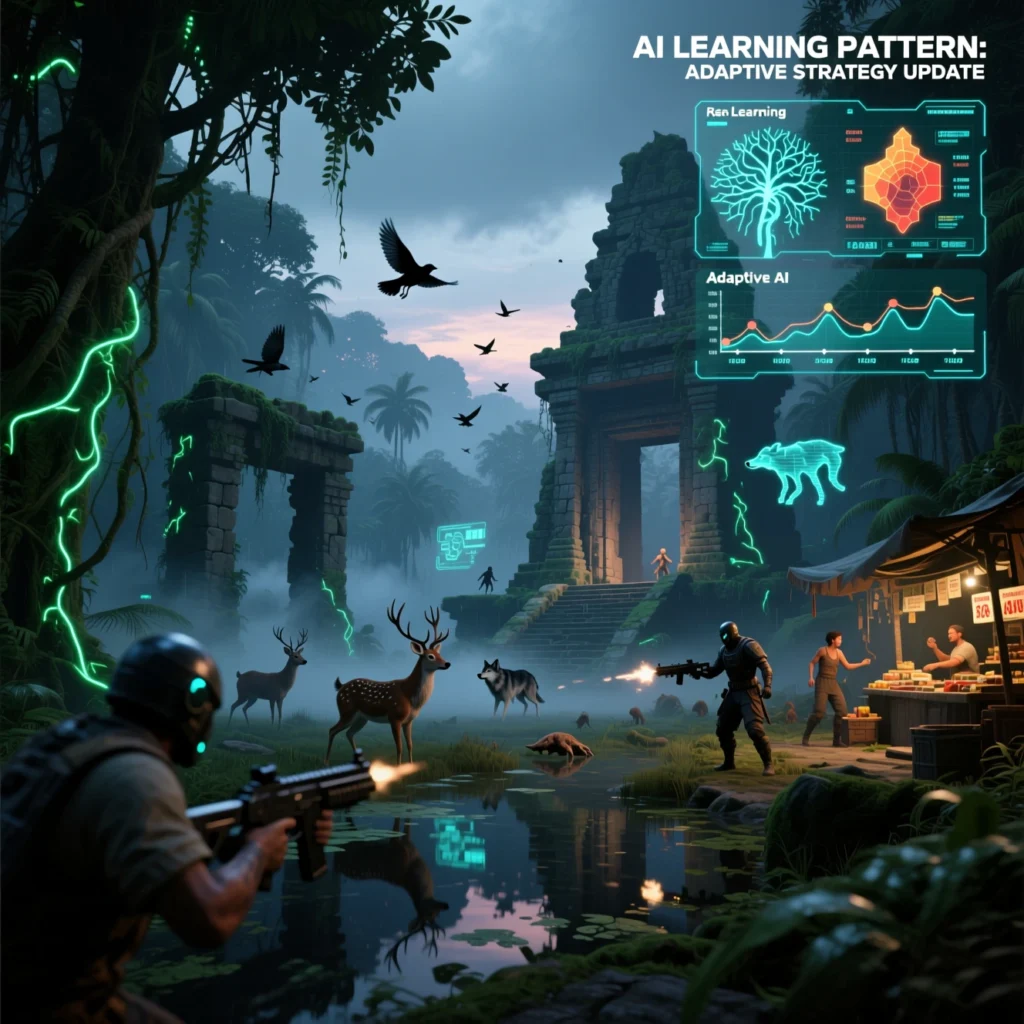
Combat systems that observe player tactics and develop counter-strategies over time. If you rely heavily on particular approaches, enemies adapt. But crucially, they adapt in ways that remain fair—learning your patterns without making success impossible.
World simulation where ecosystems actually function. Predator-prey relationships affect population dynamics. Player hunting impacts species availability. Environmental changes ripple through interconnected systems.
Narrative frameworks where major story beats remain authored while specific scenes generate based on player history and choices. The emotional arc follows designed intentions while specific moments feel uniquely personal.
None of these work perfectly yet. Each has rough edges and occasional failures. But the foundations exist and improve rapidly.
The Player Experience Transformation
What strikes me most from testing these systems is how different playing feels. There’s a weight to actions that scripted games struggle to replicate. When characters remember your behavior, when worlds respond to your presence, every decision carries consequence.
I spent several hours with a survival game prototype featuring genuine ecosystem modeling. Overhunting deer in one region forced predators to migrate, which affected other regions, which changed resource availability across the entire map. My early game decisions shaped late game challenges in ways I couldn’t have predicted but that made complete sense in retrospect.
That causality creates investment traditional games achieve only through explicitly scripted consequences. The difference between “the designer decided this happens” and “my actions led to this outcome” feels significant even when the practical result is similar.
However, this cuts both ways. Players accustomed to mastering static systems may find adaptive games frustrating. You can’t simply learn optimal strategies when the game learns alongside you. Some players will embrace that challenge; others will prefer predictable experiences.
Industry Implications and Development Realities
Building these games demands different development approaches. Traditional workflows involve creating finite content that players consume. Adaptive games require building systems that produce content within defined parameters indefinitely.
This shifts resource allocation significantly. Less emphasis on asset creation; more emphasis on systems design. Smaller teams can potentially create larger experiences, but those teams need different expertise. Programmers comfortable with machine learning become as essential as artists and designers.
Quality assurance becomes nearly impossible through traditional methods. You can’t playtest infinite possibilities. Studios must develop new validation approaches combining automated testing with statistical analysis and targeted human evaluation.
The economic implications interest me particularly. Development costs might decrease for certain production aspects while increasing for others. Whether net budgets rise or fall likely depends on specific project ambitions and team capabilities.
Challenges Nobody Should Ignore
I’d be irresponsible not to address legitimate concerns. These systems collect player data to function effectively. How that data gets stored, used, and protected raises privacy questions the industry hasn’t fully addressed.
Adaptive difficulty that reads player psychology borders on manipulation. Where exactly does personalization end and exploitation begin? Ethical frameworks for these questions remain underdeveloped.
Technical requirements present accessibility barriers. Sophisticated learning systems demand computational resources that exclude players on older hardware. Cloud-based solutions offer potential workarounds but introduce latency and connectivity dependencies.
And frankly, some players simply won’t want games that change. The appeal of static, masterable systems is legitimate. Next generation approaches suit certain experiences and audiences better than others.
Looking Forward Realistically
My honest assessment? Next generation AI games represent genuine advancement rather than marketing hyperbole. But timelines will extend beyond enthusiastic predictions, implementations will arrive gradually, and perfect execution remains years away.
The studios investing now will define gaming’s next era. Those ignoring these developments risk obsolescence as player expectations shift. The technology exists. The challenge lies in thoughtful implementation that serves player experience rather than technological showmanship.
Frequently Asked Questions
When will next generation AI games release?
Expect initial implementations within two to three years, with sophisticated features arriving over the following five years.
Will these games require new hardware?
Some features demand significant processing power. Cloud computing may extend compatibility to older systems.
Do players lose control with adaptive games?
No. Players retain agency while games respond more dynamically to their choices and behaviors.
Will next-gen AI games cost more?
Pricing remains uncertain. Development efficiencies might offset increased system complexity.
Can I still play games the same way I always have?
Yes, though optimal strategies may need constant adaptation as games learn player patterns.
Which studios are leading development?
Ubisoft, Electronic Arts, Sony, and Microsoft have publicly invested in relevant research and development.